
On this page
- What the storms have done here
- Before the season
- When a storm is forecast
- After the storm
- Avoiding storm chasers
- Terms you will hear
- Hurricane prep at a glance
- Where hurricane prep matters around Chesapeake
- A first step worth taking
- Why fastening matters most
- After the power comes back
- A one-page storm checklist
- Insurance and records
- Generators, ladders and safety
- Nor'easters count too
What the storms have done here
- Hurricane Isabel, 2003: the costliest natural disaster in Virginia's history, with about 1.8 million people without power and thousands of trees down, according to Wikipedia. In Hampton Roads, 94 percent of homes lost power, AOL reported.
- September 2016: more than 10 inches of rain in parts of southside Hampton Roads, according to the National Weather Service.
- Hurricane Matthew, October 2016: 12.84 inches at a gauge northwest of Chesapeake, according to Weather Underground; a flash flood emergency for Virginia Beach and Chesapeake, according to AccuWeather; and a federal disaster declaration covering Chesapeake, according to FEMA.
Before the season
| Task | Why |
|---|---|
| Clean gutters and downspouts | Open gutters carry storm rain |
| Replace spikes with hidden hangers | Holds in wind |
| Tighten or add hangers | Stops runs peeling off |
| Re-strap downspouts | Keeps pipes on the wall |
| Trim limbs over the roof | Fewer crushed gutters |
| Check fascia | Soft wood lets gutters tear away |
| Clear the drainage path | Water needs somewhere to go |
When a storm is forecast
- Clear any debris you can safely reach from the ground.
- Move items away from downspout outlets.
- Do not climb ladders in wind or rain.
After the storm
- Stay clear of hanging gutters and downed lines.
- Photograph and video every side from the ground.
- Have hanging sections secured or removed.
- Call your insurer.
- Get a written quote from a Virginia-licensed contractor.
- Check the license on the DPOR site.
Avoiding storm chasers
DPOR's storm damage guidance says most work over $1,000 needs a state contractor license, not just a local business license. Be wary of door-to-door crews, pressure to sign immediately, large cash deposits and anyone offering to deal with your insurer for you.
Terms you will hear
| Term | What it means on a Chesapeake house |
|---|---|
| Hidden hanger | A bracket that clips under the front lip of the gutter and screws through the back into the fascia, invisible from the street. |
| Hurricane strap | A metal tie that fastens roof framing to walls. It is roofing work, not gutter work, but it is worth asking about on older houses. |
| Fascia | The board fixed across the rafter ends. Gutters screw into it, so humidity and leaks that soften it loosen every hanger. |
| Downspout | The vertical pipe, also called a leader, carrying water to the ground. Common sizes are 2x3 and 3x4 inches. |
| Valley diverter | A small metal fin in the gutter under a roof valley that stops a rush of water from shooting over the front. |
See hurricane and storm damage repair.
Hurricane prep at a glance
| What people ask | Short answer |
|---|---|
| When to check? | Early summer |
| Take gutters down? | No; secure them |
| After a storm? | Photos first |
| Who repairs? | A Virginia-licensed contractor |
Where hurricane prep matters around Chesapeake
| Neighborhood or town | Why it comes up there |
|---|---|
| Western Branch | Riverside wind exposure |
| Hickory | Open land with little shelter |
| Great Bridge | Big trees over two-story roofs |
A first step worth taking
Book a pre-season check in May or June, before contractors are busy with storm work.
Why fastening matters most
In a hurricane, the gutter itself rarely fails first. Spikes pull out, hangers bend and wind gets behind a loose run and peels it off. Hidden hangers screwed into sound fascia at close spacing, stiffer coil and well-strapped downspouts all reduce that. Trees are the other risk: Hurricane Isabel brought down thousands across Virginia, according to Wikipedia. Trimming limbs over the roof before the season protects gutters and the roof itself.
After the power comes back
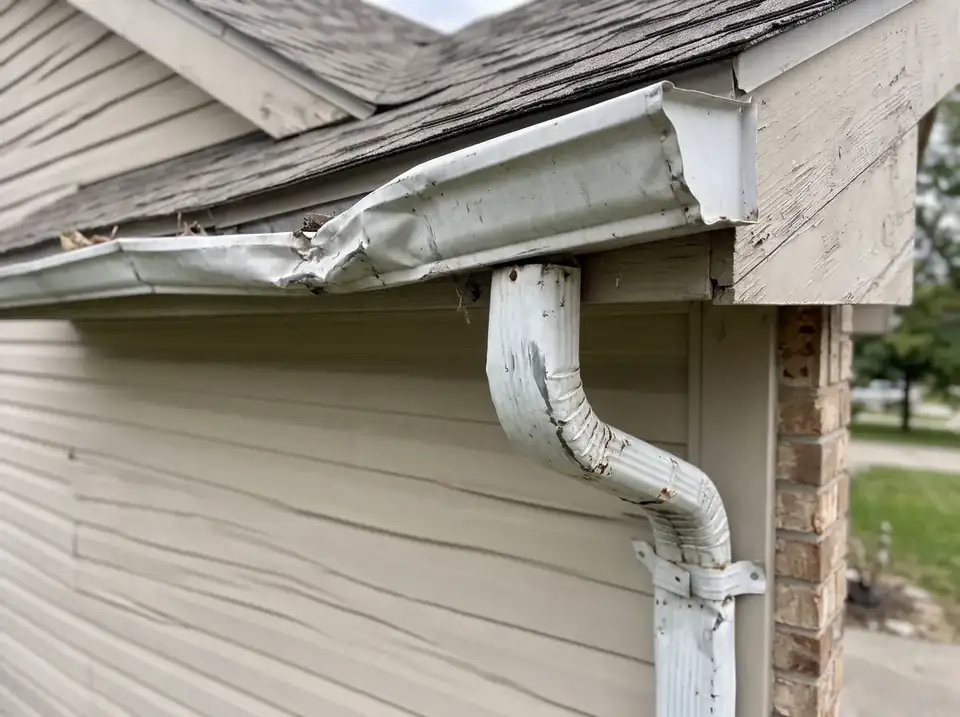
Once it is safe, look at every side from the ground. Note bent sections, gaps at the fascia, downspouts pulled off and gutters full of twigs. Clear what you safely can from the ground and book repairs for the rest. Clogged gutters before the next rain cause more damage than the storm did.
A one-page storm checklist
| When | Task |
|---|---|
| May to June | Clean gutters and downspouts |
| May to June | Tighten or replace hangers; re-strap downspouts |
| May to June | Trim limbs over the roof |
| Storm forecast | Clear outlets you can reach safely from the ground |
| Storm forecast | Move items away from downspout outlets |
| After the storm | Photograph damage from the ground |
| After the storm | Have hanging sections secured |
| After the storm | Clean out storm debris before the next rain |
Insurance and records
Before the season, photograph each side of the house with the gutters in good shape, and keep the photos with your policy documents. After a storm, the before-and-after pictures make it easier to show what changed. Read your policy for how it treats wind and falling-tree damage, and how it handles wear and tear, which is usually excluded. Keep every quote and invoice from storm repairs. If you are unsure whether damage is worth claiming, ask the insurer before work starts.
Generators, ladders and safety
After a storm, keep ladders away from damaged gutters and any lines that may be down, and never set a ladder against a bent or loose gutter. Leave roof-edge work to a contractor while wind and debris are still about.
Nor'easters count too
Not every damaging storm is a hurricane. Winter nor'easters bring long spells of wind-driven rain that test the same hangers and joints, so the pre-season checks help year-round.